Why are the Giants and Mariners so similar?
The Seattle Mariners fired their manager yesterday, just a season after the San Francisco Giants fired theirs. Both teams have employed Mitch Haniger within the last 365 days. The teams have also traded with each other 11 times since 2019*. Both teams have nearly identical records over the past 3 seasons (332-282 for the Mariners, 332-283 for the Giants).
So, what’s the deal why are these teams so similar?
As with most human organizations, it starts at the top. No, not their Presidents of Baseball Operations — we’ll get to Farhan Zaidi and Jerry Dipoto in a moment — the ownership group. Both want a team built on a very specific budget number, especially relative to their peers. The Mariners don’t draw as much as the Giants do in attendance and San Francisco just manages to crack the top 10 in terms of media market while Seattle is 12th. But the Mariners don’t own a chunk of their coverage like the Giants do and I’m unclear if they own an entire neighborhood around T-Mobile Park like the Giants do with Mission Rock.
But the Yankees and Dodgers they are not. Not even the Red Sox want to keep pace with those teams. The Giants and Mariners are like most teams in that they want to cut corners where they can and investment the money in the development of cheap labor and spare parts that can be cobbled together to generate above average results in the aggregate.
Jerry Dipoto and Farhan Zaidi are simply two members in the post-breakthrough Moneyball world. Acolytes of acolytes. How they do things is rooted in how they first learned to do things and how their suggestions helped the people they looked up to succeed more. Now with their own shows to run, we’re seeing the limitations of their viewpoints and actions.
I really want to excise 2021 from the comparison since it was such a fluke for the Giants, but I won’t because including it will serve a larger purpose. I will still remove 2019 and 2020 from the Zaidi-Dipoto comp, however, because Year 1 of a Rebuild and Pandemic Year are tough to really reflect how similar they both are; but, it’s important to note that Dipoto’s first full year as Seattle’s GM was 2016 (though, technically, he was hired in September 2015; he became President of Baseball Operations in 2023).
Since 2021, the Giants and Mariners have lineups which have generated 98.8 fWAR (17th in MLB) and 94.0 fWAR (18th), respectively, with Seattle’s defense registering an unfathomably awful -150.8 Defensive Runs Above Average. On pure offense, the Mariners have a 100 wRC+ — exactly league average. The Giants? 98 wRC+. On the pitching side, the Giants are +66.4 fWAR since 2021 (7th in MLB) while Seattle is +60.8 (11th).
Both Dipoto and Zaidi have both guided their teams to the postseason exactly once during their tenures and both led to first round bounces. Last year, the Mariners spent the most they ever had on their payroll and wound up missing the postseason. This year, the Giants have done the exact same thing. Last year, the Mariners had strong pitching and hitting, but some bad luck limited them to 88 wins. This year, they can’t hit but can pitch. This year, the Giants can hit (a little) but can’t pitch (until lately); and last year and the year before, maybe some extra bad luck kept them from doing better than their final results.
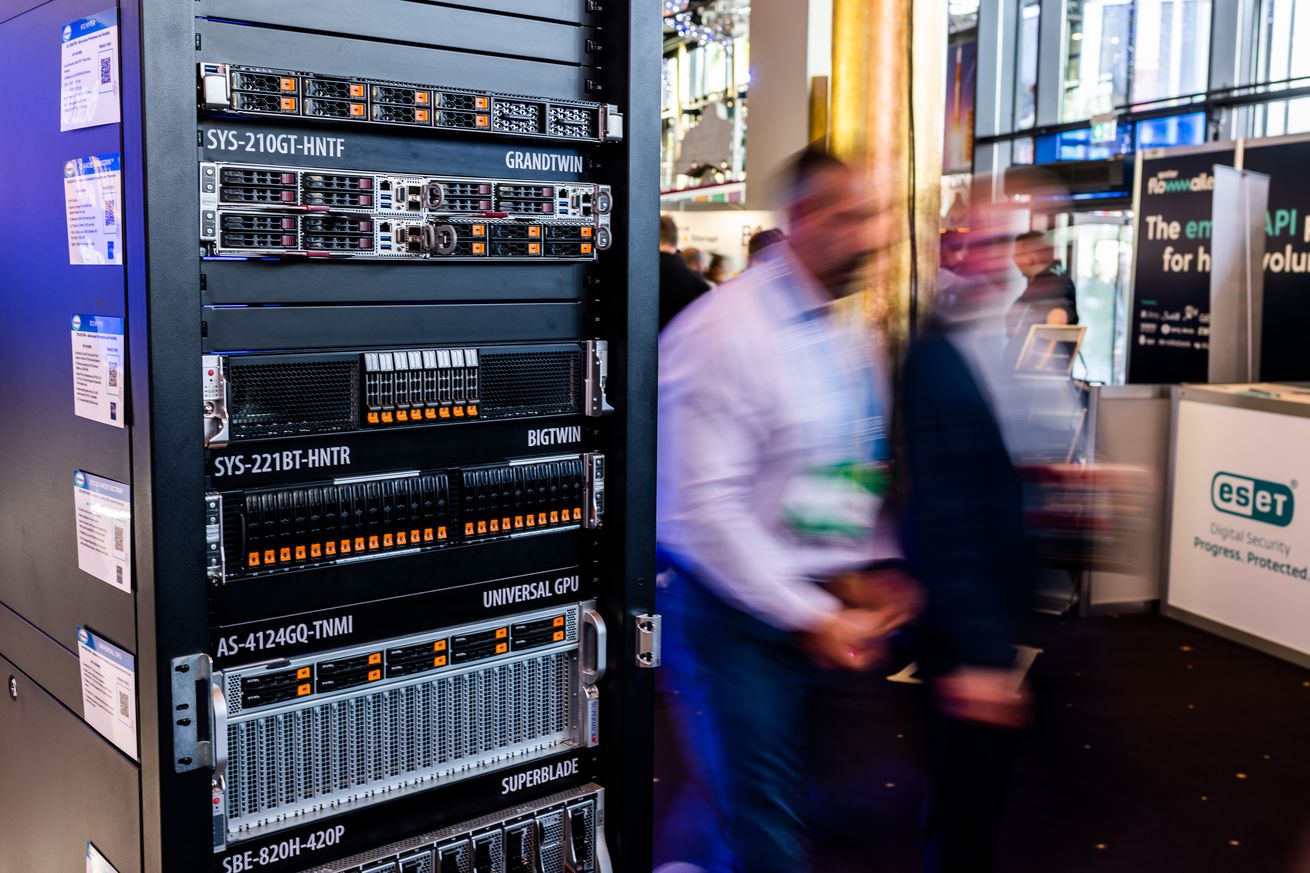
That the teams have swapped so many players does indicate that their math takes them to the same conclusions. I put in the headline Python software because I’m an ignoramous who only barely understands what regression analysis means or what the various programs do. There’s also SQL and Tableau and many other database and statistical modeling platforms that teams use these days. The Giants gutted a lot of their clubhouse area to install a bunch of machines to do the data processing. It’s safe to say that the Mariners and Giants use a lot of the same coding in their player evaluations.
Obviously, Dipoto and Zaidi’s modeling is doing something right because they’ve kept their jobs. The teams must be profitable and season ticketholder feedback positive enough. It’s working in some way. I am too stupid to divine what it is that they look for in a player or even what grouping of players they might look for (at the exclusion of other players) to plug into their modeling but it seems pretty clear that both execs have a type and they have a specific way of using them.
In that way, Scott Servais (fired yesterday) and Gabe Kapler (fired last September) were means to an end and as with managers since the beginning of managers, hired to be fired. Losing 8 of 9 and having a 12-18 mark in the second half isn’t all about bad data and usage patterns — there’s compelling anecdotal evidence to suggest a manager & coaching staff’s vibes could have an impact.
That’s a lot of losing for a team that’s supposed to be better than that on paper. The Mariners are still pitching better than most of the league here in the second half, and their lineup, as much as it has faltered (96 wRC+) still haven’t fallen off as much as the Giants did last season (80 wRC+ in the second half).
At the end of the day, as much as it’s on the players to perform, let’s not pretend that the front offices are smol beans here. Both teams’ braintrusts are under a microscope. Eventually, the smartest guys in the room run out of managers to fire and the odds of holding on to a tenuous position (remember: there are only 30 of these POBO positions) stop being in their favor. Baseball Reference gives both teams about a 6.5% chance of making the postseason, by the way.
This weekend, we’ll be watching two disappointing guys play Scrabble against each other using the exact same tray of letters.
*-All the transactions (with Marc Delucchi doing the bulk of the work here in this post from 2023): Alex Blandino and cash for Stuart Fairchild, cash for Kevin Padlo, Prelander Berroa for Donovan Walton, cash for Jacob Nottingham, cash for Sam Delaplane, Matt Boyd & Curt Casali for Andy Thomas & Michael Stryffeler, Mike Ford for cash, Tom Murphy for Jesus Ozoria, PTBNL or cash for AJ Pollock & Mark Mathias, Mitch Haniger & Anthony DeSclafani & Cash for Robbie Ray, cash for Mike Baumann.
Series details
Who: San Francisco Giants vs. Seattle Mariners
Where: T-Mobile Park, Seattle, Washington
When: Friday (7:10pm PT), Saturday (1:10pm PT), Sunday (1:10pm PT)
National broadcasts: MLB Network simulcast (Friday)
Projected starters
Friday: Hayden Birdsong vs. Luis Castillo
Saturday: Blake Snell vs. TBD
Sunday: Robbie Ray vs. TBD
Where they stand
Mariners, 64-64 (2nd in ALW, -7.5 WC), 503 RS / 489 RA | Last 10 games: 2-8 Giants, 65-64 (4th in NLW, -3.5 WC), 556 RS / 567 RA | Last 10 games: 4-6
Mariners to watch
Mitch Haniger: Wait, Mitch Haniger is still a useful player? Uh, sure. Why not? A bust in San Francisco, he’s rebounded nicely from a corpse to a warm body, hitting .222/.317/.417 in the second half with 4 home runs, 2 double, and 9 walks against 26 strikeouts. Don’t laugh at that .222 average. His 115 wRC+ is 95th out of 223 (min. 80 PA) and would make him the fourth-best hitter on the Giants after Tyler Fitzgerald (196 wRC+), Matt Chapman (157), and Michael Conforto (120). The Giants basically turned him into a platoon bat once he crept off the IL, but the Marines haven’t done the same and he’s actually hit a lot better this year against righties (.717 OPS) than vs. lefties (.507). Anyway, if he does anything positive against the Giants, join me in banging your head against the wall.
Julio Rodríguez: The 2022 Rookie of the Year has fallen on hard times here in 2024. After back-to-back .800+ OPS seasons, he’s at .675 through 109 games and 451 plate appearances. His .500 slugging evaporated down to .364. Did MLB do something to the balls? Has the pitching book against him gotten better? Is it all Scott Servais’s fault? Or is it a simple matter of bad luck?
Since returning from the IL after an ankle issue, he’s hit even worse than his season line: .222/.263/.278 in 38 PA with 1 walk, 10 strikeouts, and just 2 extra base hits (both doubles).
Randy Arozarena: The Mariners have such great starting pitching (George Kirby: 3.7 fWAR, Logan Gilbert: 3.4, Luis Castillo: 2.5, Bryce Miller: 2.2, Bryan Woo: 2.0) that I’d be remiss for simply ignoring them (their bullpen, though, has been a bit of a disaster: 1.0 fWAR total), but Arozarena is a fun baseball player and if the Giants had been a little better around the trade deadline and had a little more room on the payroll, they might’ve made a play for him.
He hasn’t had a very good season, though, and the Rays traded him when his OPS was at .712. He’s raised it to… .713 since joining Seattle, with a line of .224/.385/.329 in 22 games, which is oddly close to his total split for interleague play this season: .198/.365/.345 (36 games, 148 PA). Since coming over to the Mariners, he’s faced the Phillies, Mets, Pirates, and Dodgers — half of his games have come against unfamiliar opponents.
Giants to watch
Robbie Ray: As much as I lament the Mitch Haniger Year, if not for him, the Giants would not have Robbie Ray here at the end of another failed playoff run. What’s more interesting is what will happen after the season. Theoretically, each positive inning he has pushes him closer to opting out of his contract. Is there any bad blood between him and the Mariners? Will be fascinating to watch (or hear, if his grunts sound a little angrier than usual).
A little over a month ago, I made some second half predictions. Of Robbie Ray I predicted,
Robbie Ray will be fine
He’s maybe going to get, what? 10 regular season starts? I’ll predict that he’s fine to good in 5 of them (4-6 IP 3-5 ER), great in 2 of them (6+ <3 ER), and bad in 3 of them (4 ER).
He looks on track to make considerably more than 10 starts. This weekend will be his 7th, so he might get to 14? I’m not sure it changes my prediction too much, and I might not want to as it’s pretty solid at the moment. I’m going to cheat a little and say that his debut in Dodger Stadium (5 IP 1 ER 8 K) was great. His last start (against the White Sox) was great.
He seems capable of uncorking an 8+K game at any point, quite frankly, so maybe he hasn’t maxed out that ceiling. But he’s only had 1 bad start (before the White Sox, just 2⁄3 of an inning against Atlanta) and his second start (4.1 IP 4 ER) was… fine, despite allowing 3 home runs. I was fully factoring in that he’s rusty.
Heliot Ramos: Since Grant McCray took over in center, Ramos’s bat has picked up: .292/.333/.542 (7-for-24 with a trio of doubles, a homer, and 2 walks against 8 K) in his last 7 games.
Camilo Doval: He looks to be eligible to return to the roster on either Friday or Saturday of this series and it’s an open question as to what role he’ll have when/if he does get the call-up. Ryan Walker has been shakily great as the closer and Doval will need some time to earn back trust. Blowing a big game on the road doesn’t seem like the way to go, so I’d guess we’d see him earlier than the 8th or 9th to start, and hopefully not at all in an extra inning.