Possibly the worst team in baseball history gave San Francsico a run for their money
Hoping for a casual weekday series against a historically awful Chicago White Sox team? Looking to kick your feet up and relax after a long day of work with the game on in the background, letting your thoughts peacefully wander as the late summer light feathers away?
Then look no furth—
Nope, sorry, there is no respite for a San Francisco Giants fan. No such thing as an “easy” win. No match-up is “in the bag.”
The White Sox were mathematically eliminated from the postseason on the 17th—the earliest since the start of the divisional era in 1969. They have just 30 wins, nearly 100 losses, and are on pace to win just 10 more and sloppily scrawl their names over the pages of league and club books as one of the worst teams ever assembled.
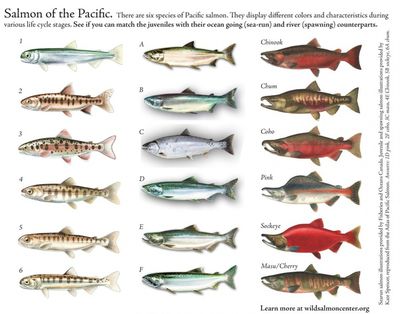
In the 8th inning, with the Giants leading 5-1, the television broadcast flashed a fun factoid on the screen: Chicago was currently in the throes of a 60-game losing streak when behind after the 6th inning. Piled atop all the previous numbers of futility and ineptitude making up the Sox’s formless sundae of a season, this last cherry finally convinced me to let my guard down. I felt somewhat comfortable enough to take my eye off the ball if you will, open up my laptop and chase a random—but organic!—concern about my inability to properly identify the different types of salmon.
I knew the sockeye male turned red when preparing to spawn but didn’t the coho as well? And the pink salmon, often referred to as “humpies” for their swollen backs, but is there another consistent and discernible difference between their humps and that of the chum or sockeye? And how the heck are you supposed to tell them apart when they’re all scaled in the silvery coloration of their ocean state?
Sweating through my anadromous concerns, I caught Spencer Bivens painting a beautiful four-seam fastball on the outside corner that Curt Casali framed awkwardly and led to the home plate umpire missing the call. Clouds formed. What should’ve been strike-three and the second out of the inning forced another pitch to Korey Lee, one that he pulled down the line for a double, setting up runners at second and third. Anxiety bubbled. Trouble brewed.
I reluctantly closed the salmon tab as Bivens was swapped for Tyler Rogers. The Sox tied together a sac fly—which could’ve been a lot worse if not for Michael Conforto laying out in left—and a two-out, RBI single. Two runs in and the once comfortable 5-1 lead had been whittled down to a save situation, promising a stressful tight-rope walk in the 9th inning.
Once again we were reminded that there are no gimmes in baseball, no lay-ups because that’s basketball. The game is never easy, especially for these Giants.
The fact that they had a lead was somewhat surprising. Chicago had outhit San Francisco by plenty in the early innings. They had 11 knocks in total with 3 base-on-balls. An opposite field approach against Kyle Harrison, as well as some less than consistent command of his pitches, set them up for golden scoring opportunities in the 3rd, 4th, and 5th innings.
The 7-8-9 hitters all reached safely to start the 3rd. But with nobody out and the bases loaded, the Sox came up empty—a small comfort to us beleaguered Giants fans that this phenomena did indeed happen to other teams.
Harrison bagged the all-important unproductive out with a three-pitch see-ya of leadoff man Lenyn Sosa with his much-improved slurve. Lone Chicago bright spot Luis Robert Jr. stepped into the box and shot a first-pitch fastball towards the hole on the right side of the infield at 107 MPH. Fortunately, Thairo Estrada and his tiny but steady glove had reclaimed second base earlier in the day. Falling on top of the ball, Estrada initiated the 4-6-3 two-fer and keep Chicago off the board.
The reprieve for Harrison was short-lived. Two singles to start the 4th put the young southpaw back in the stretch, but not back to stressin’. With little room for error, Harrison honed in on his location and trusted his peripheral pitches. A beautiful low-and-away change-up produced a force-out at second, putting runners on the corners. An elevated 1-2 slurve got Nick Senzel to pop-up to short, and on the next pitch, Dominic Fletcher rolled out to short to end the threat.
The White Sox wouldn’t let up, finally breaking through on a 2-out single by Robert in the 5th. An RBI set-up by Harrison losing #9 hitter Brooks Baldwin to a walk after putting him in a quick 0-2 hole. Baldwin’s career is a month old, he was hitting .205 coming into the game with a sub .280 OBP. I know this is terribly reductive but…he’s a pair of shoes. His speed is his greatest attribute, and it shouldn’t be that hard for opposing pitchers to keep him from using it. Yet Baldwin reached base four times last night (2 1B, 2 BB). The Giants couldn’t get him out. He legged out a bunt single to load the bases in the 3rd, and in the 5th he worked a walk and promptly stole second to set-up the first run of the game.
The White Sox have the worst offense in baseball, but the Giants were playing the part against starter Jonathan Cannon. The tall right-hander had faced the minimum batters over the first three innings, authoring an 8-pitch 2nd inning with the help of a double play off the bat of Matt Chapman that erased Conforto’s lead-off single. In the 4th, Conforto ripped a double into the left field corner that probably would’ve scored anyone else but for the man standing on first at the time. Even with a two-out jump, a hobbled LaMonte Wade Jr. could only reach third before Cannon retired Chapman on a flyout.
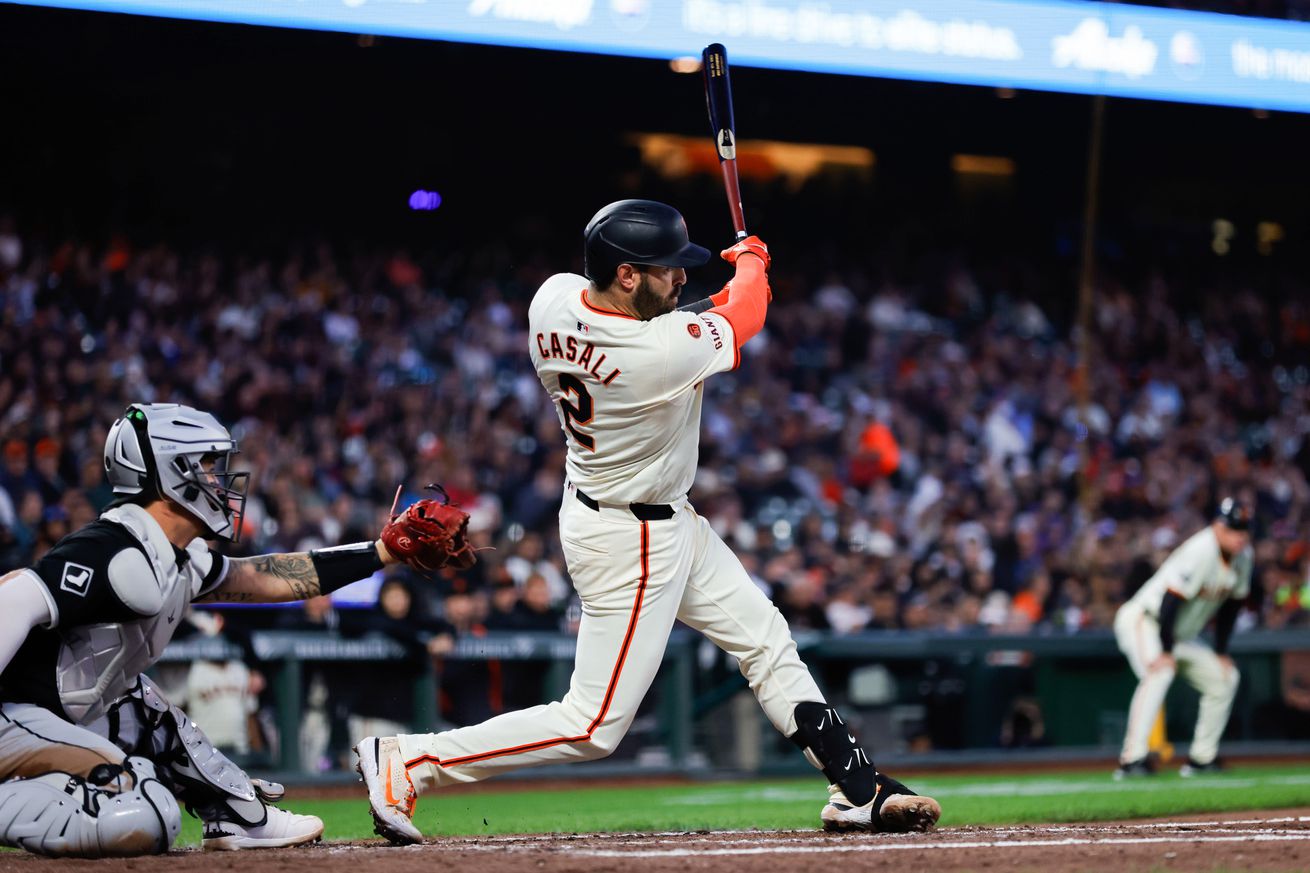
The run scored by Chicago in the top half of the 5th served as a wake-up call, and it was the bottom of the lineup that were the first out of bed. Estrada and Grant McCray both singled with one out, and back-up catcher Curt Casali—who had only 10 plate appearances in the month of August going into the game, who hadn’t recorded a knock since July 27th—roped the elusive hit on which the whole game turned.
Curt Casali ties it up pic.twitter.com/eJZZ4CCpik
— SF Giants on NBCS (@NBCSGiants) August 20, 2024
Casali was a late addition to the line-up after Patrick Bailey was scratched with minor “side tightness.” It was also his first run batted-in since June 18th, and kickstarted an oft-seen barrage of productive hitting from the San Francisco line-up. Fitzgerald and Wade both knocked in runs and Heliot Ramos lifted a sacrifice fly to center, easily scoring Fitzgerald. 3-for-3 and a sac fly with runners in scoring position in the inning. They’d go 4-for-6 in the game.
La 5ta entrada estuvo pic.twitter.com/PkHiUKKlpx
— SF Gigantes (@SFGigantes) August 20, 2024
Matt Chapman’s solo homer of the season padded the lead in the 6th. The 20th of the season made Chapman the second third baseman in franchise history—and first since Hall of Famer Fred Lindstrom in 1930—to post a 20+ HR, 30+ 2B, 10+ SB season.
¡Ya son 2️⃣0️⃣ jonrones para Matt Chapman! pic.twitter.com/Gq8Oy7ixGj
— SF Gigantes (@SFGigantes) August 20, 2024
As mentioned above, things got harried just as a rhythmic calm should’ve descended over the evening. Conforto grounded into a double-play to let sour a bases-loaded scoring opportunity in the 7th that began to loom large as a brain fart from Fitzgerald on a routine grounder allowed Robert Jr. to leg out a lead-off single in the 8th, eventually leading to two runs.
With Jordan Hicks on the mound to close out the 9th (Ryan Walker was unavailable after working two innings on Sunday), the #9 hitter Baldwin singled to lead off the frame and immediately bring the tying run to the plate. Again the defense—which had been so excellent at times—botched a double play ball. The misplays came on all fronts. Estrada dropped the grounder initially. Fitzgerald, who’s timing was off because of the bobble, got the out at second but rushed the throw to first and spiked it. Still it was a one-hopper that Wade could’ve handled, but in a long stretch the ball skirted past his glove—if he had picked it, they probably would’ve got the runner at first.
Robert then collected his third hit of the day and brought the lead run to the plate. Hicks got Andrew Vaughn—who had hit the ball hard all evening—to fly out to left. The last out is always the hardest, especially for Hicks who has spent this whole season chasing that conclusive third strike in an at-bat or third out in an inning. He put Lee in a quick 0-2 hole but then completely lost control. A yanked sweeper bounced in front of the opposite batter’s box that Casali somehow backhanded, preventing the tying run to reach scoring position. The relief was short-lived as was the awe of his soft hands when he got crossed up on the very next pitch, elevated sinker that clanked off his palm allowing the runners to advance anyway.
Full count, tying run at second, lead run at the plate, eighth pitch of the at-bat—this is how normal teams secure wins against the White Sox, right?